
How Much Does Tree Surgery Cost in the UK? 2024-2026 Price Guide
Understanding tree surgery costs can be challenging. Prices vary significantly depending on the type of work required, tree size, location, and complexity of the job. This comprehensive guide breaks down typical costs for tree surgery services in the UK, helping you budget effectively and know what to expect when hiring a professional arborist.
Quick Summary: Average Tree Surgery Costs
Before we dive into the details, here’s a snapshot of typical tree surgery costs in the UK:
- Tree felling (small tree): £250 – £500
- Tree felling (medium tree): £500 – £1,200
- Tree felling (large tree): £1,000 – £3,000+
- Tree pruning/trimming: £200 – £800
- Crown reduction: £350 – £1,500
- Stump grinding: £80 – £350 per stump
- Emergency tree removal: £500 – £2,500
- Hedge trimming: £50 – £200 per hour
These are guide prices only. Your actual costs will depend on several factors we’ll explore throughout this article.
Understanding What Affects Tree Surgery Costs
Tree surgery pricing isn’t arbitrary. Professional arborists calculate costs based on multiple factors that directly impact the time, equipment, and expertise required for your specific job.
Tree Size and Height
The size of your tree is the primary cost driver. A small ornamental tree under 5 metres requires minimal equipment and can often be removed in a few hours. A mature oak exceeding 25 metres demands specialised climbing equipment, potentially crane hire, and a full day’s work from an experienced team.
Small trees (under 8 metres) typically cost £250-£600 for removal. Medium trees (8-15 metres) range from £500-£1,200. Large trees (15-25 metres) generally cost £1,000-£2,500, while exceptionally large specimens over 25 metres can exceed £3,000.
Location and Access
Where your tree stands significantly impacts cost. A tree in an open field with vehicle access costs substantially less than one in a confined back garden accessible only through your house. Limited access means hand-carrying equipment, slower work rates, and higher labour costs.
Trees near buildings, power lines, or valuable property features require extra care and planning. Arborists must use sectional dismantling techniques, lowering each piece carefully with ropes rather than simply felling the tree. This meticulous approach takes considerably longer and increases costs by 30-50% compared to straightforward removals.
Tree Condition and Species
Dead, diseased, or damaged trees often cost more to remove safely. The wood is unpredictable and more likely to break unexpectedly during removal. Some tree species present unique challenges—dense hardwoods like oak take longer to cut, while brittle species require extra caution.
Protected species or trees with preservation orders need additional surveys and council permissions before work begins. This administrative work adds to overall costs, though it’s essential for legal compliance.
Complexity and Risk
Every tree surgery job carries some risk, but certain scenarios demand exceptional skill and caution. Trees leaning towards buildings, those with multiple trunks, or specimens with significant decay require advanced techniques and often additional insurance coverage. These high-risk removals can cost 50-100% more than standard work.
Detailed Cost Breakdown by Service Type
Tree Felling and Removal
Complete tree removal involves cutting down the tree, removing all debris, and typically grinding the stump below ground level. Prices vary dramatically based on size:
Small trees (under 8 metres): £250 – £600 These include ornamental trees, young specimens, and small conifers. Most small tree removals take 2-4 hours with a two-person team. If access is good and the tree stands in an open area, costs stay at the lower end.
Medium trees (8-15 metres): £500 – £1,200 This category covers most mature garden trees, including birch, rowan, and smaller cherries. Removal typically requires a full day’s work. Expect costs toward the higher end if working near buildings or in confined spaces.
Large trees (15-25 metres): £1,000 – £2,500 Mature oaks, ash, sycamore, and large conifers fall into this range. These removals often need multiple days, specialist climbing equipment, and careful sectional dismantling. Trees near property boundaries or buildings always cost more due to the precision required.
Extra-large trees (over 25 metres): £2,500 – £5,000+ Veteran trees, large oaks, and significant conifers command premium prices. Some require crane hire (adding £500-£1,500 per day), road closures, or extensive planning. These are specialist jobs requiring highly qualified arborists with years of experience.
Tree Pruning and Trimming
Regular pruning maintains tree health and manages growth. Costs depend on tree size, the amount of growth to remove, and whether you need waste removal.
Light pruning (small trees): £150 – £400 Routine maintenance on young or small trees, removing deadwood, or light shaping. Usually takes 2-4 hours.
Standard pruning (medium trees): £350 – £800 Comprehensive pruning of mature garden trees, including crown thinning, removing crossing branches, and shaping. Typically requires 4-8 hours of work.
Major pruning (large trees): £600 – £1,500+ Extensive work on mature specimens, often involving significant crown reduction or major structural pruning. Large trees may need multiple visits or several days’ work.
Crown Reduction and Reshaping
Crown reduction involves removing the outer sections of branches to reduce overall tree size whilst maintaining its natural shape. This skilled work requires deep knowledge of tree biology and pruning techniques.
Small crown reduction (up to 3 metres): £300 – £700 Suitable for managing tree size in smaller gardens or creating clearance from buildings.
Medium crown reduction (3-6 metres): £600 – £1,200 Significant size reduction on mature trees, often recommended when trees have outgrown their space.
Large crown reduction (over 6 metres): £1,000 – £2,500 Major reshaping of large mature trees. This specialist work dramatically changes tree structure whilst preserving health and appearance.
Stump Grinding and Removal
After tree removal, you’re left with a stump. Most homeowners opt for grinding, which removes the stump below ground level, allowing you to replant or landscape the area.
Small stumps (under 30cm diameter): £80 – £150 Quick grinding jobs taking 30-60 minutes. Many tree surgeons include one small stump free when removing a tree.
Medium stumps (30-60cm diameter): £150 – £250 Standard stumps from mature garden trees. Grinding typically takes 1-2 hours depending on wood hardness and root spread.
Large stumps (over 60cm diameter): £250 – £500+ Significant stumps from mature oaks, ash, or other large trees. These require powerful machinery and can take several hours. Very large stumps occasionally need specialist equipment, increasing costs further.
Emergency Tree Services
Storm damage, fallen trees, or dangerous trees requiring urgent attention command premium prices. Emergency callouts typically cost 50-100% more than scheduled work due to out-of-hours availability and the urgent nature of the work.
Emergency callout: £500 – £2,500 Prices depend on tree size, complexity, and time of callout. Weekend and night work costs more. Most tree surgeons charge a minimum callout fee (£300-£500) plus hourly rates for emergency work.
Hedge Trimming and Maintenance
Professional hedge trimming keeps boundaries neat and encourages healthy growth. Costs vary based on hedge height, length, and access.
Standard hedge trimming: £50 – £100 per hour Most tree surgeons charge hourly for hedge work. A typical domestic hedge (2 metres high, 10 metres long) takes 2-4 hours including waste removal.
Tall hedge reduction: £200 – £500 Overgrown leylandii or other tall hedges requiring ladders or platforms cost more due to the additional time and equipment needed.
Regional Price Variations Across the UK
Tree surgery costs vary considerably by location. Understanding regional differences helps you budget accurately and recognise fair pricing.
London and Southeast England
The highest tree surgery costs in the UK. Small tree removal starts around £400-£600, medium trees £800-£1,500, and large trees £1,500-£4,000+. Premium prices reflect higher operating costs, expensive insurance, and strong demand. However, competition is fierce, so obtaining multiple quotes often reveals significant price variations.
Midlands and Northern England
More moderate pricing. Small tree removal typically costs £250-£500, medium trees £500-£1,200, and large trees £1,000-£2,500. Cities like Manchester, Birmingham, and Leeds see prices slightly higher than surrounding rural areas, but costs remain significantly below London levels.
Scotland and Wales
Generally lower costs, particularly in rural areas. Small tree removal often starts at £200-£400, with large tree removal rarely exceeding £2,000 unless particularly complex. However, remote locations may attract travel charges that offset lower base rates.
Northern Ireland
Comparable to northern England and Scotland. Competitive market keeps prices reasonable, though Belfast and surrounding areas see slightly higher rates than rural counties.
Additional Costs to Consider
Beyond the core tree surgery work, several additional costs may apply to your project:
Waste Removal and Disposal
Most quotes include basic waste removal, but confirm this upfront. Some tree surgeons leave large logs for you to process as firewood, reducing costs by £50-£150. Others charge extra for chipping all waste and removing it from site. Commercial waste disposal typically costs £80-£200 depending on volume.
Tree Preservation Orders and Planning Permission
Trees with preservation orders require council permission before work proceeds. Application fees vary by council (typically £100-£200). Some tree surgeons handle applications for you, charging £100-£300 for this service. Budget 4-8 weeks for planning approval.
Traffic Management and Road Closures
Trees overhanging public highways may require road closures or traffic management during work. Costs for these services range from £300-£1,000 depending on duration and complexity. Your local council may also charge fees for temporary road closures.
Crane Hire
Exceptionally large or difficult trees sometimes need crane assistance. Crane hire typically adds £500-£1,500 per day to project costs. Your tree surgeon will advise if crane access is necessary.
How to Get Accurate Quotes
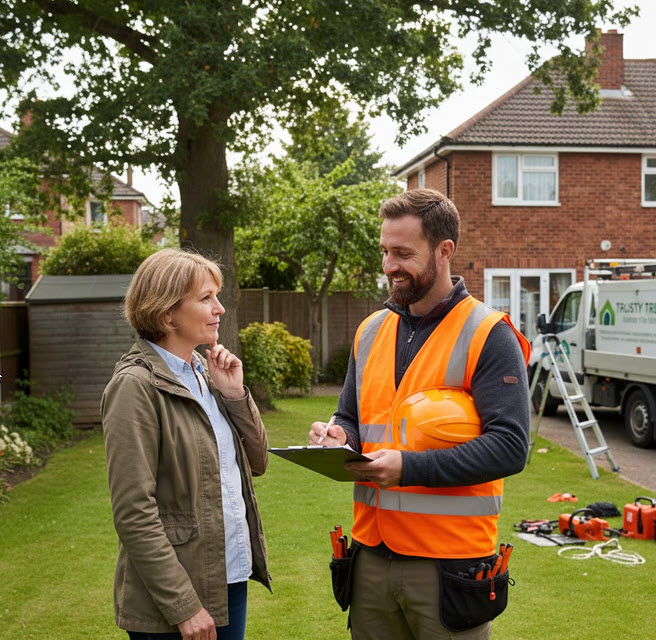
Professional tree surgeons provide detailed quotes after site visits. Here’s how to ensure you receive accurate, comparable quotes:
Request Multiple Quotes
Always obtain at least three quotes from qualified professionals. This gives you a realistic sense of fair pricing and helps identify unusually high or suspiciously low estimates. Quotes varying by 20-30% are normal; larger discrepancies warrant investigation.
Ensure Site Visits
Never accept quotes given over the phone or via photos alone. Competent arborists always inspect trees in person, assessing size, condition, access, and site-specific challenges. Quotes provided without site visits are unreliable and often lead to disputes.
Get Written Quotations
Insist on written quotes detailing exactly what’s included. Good quotes specify tree location, work to be carried out, waste disposal arrangements, insurance coverage, and expected completion timeframe. Vague quotes often lead to unexpected additional charges.
Check What’s Included
Confirm whether quotes include waste removal, stump grinding, and site cleanup. Some tree surgeons quote for tree removal only, adding stump grinding and waste disposal as extras. Understanding what’s included prevents surprises when the final invoice arrives.
Questions to Ask Before Hiring
Protect yourself by asking these essential questions before engaging any tree surgeon:
Are you fully insured? Professional tree surgeons carry public liability insurance (minimum £5 million) and employers’ liability insurance. Request proof of current insurance before work begins.
What qualifications do you hold? Look for NPTC (National Proficiency Tests Council) qualifications in tree climbing, aerial cutting, and chainsaw use. Many reputable arborists also hold Lantra qualifications or professional memberships with the Arboricultural Association.
Can you provide references? Established tree surgeons happily provide references from recent customers. Contact these references to ask about work quality, professionalism, and whether the job was completed on time and budget.
Do you have local authority approval if required? If your tree has a preservation order or stands in a conservation area, ensure your chosen contractor understands planning requirements and will obtain necessary permissions.
What’s your payment structure? Most tree surgeons request payment on completion. Be wary of demands for large upfront payments, particularly for straightforward jobs. For extensive projects, staged payments are reasonable.
Money-Saving Tips
Tree surgery represents a significant investment, but several strategies can reduce costs without compromising quality:
Time Your Work Strategically
Winter (November-March) is quieter for tree surgeons, and many offer discounted rates during these months. Avoid peak times (late spring and summer) when demand and prices peak.
Combine Multiple Jobs
If you need work on several trees, have everything done together. Tree surgeons often reduce per-tree costs when completing multiple jobs in one visit, as mobilisation costs are spread across more work.
Keep Waste as Firewood
If you have a wood burner or open fire, keep suitable logs rather than paying for waste removal. This can save £100-£200. Ensure wood is properly seasoned before burning.
Handle Minor Work Yourself
Low-level pruning and hedge trimming are suitable DIY projects if you’re comfortable working safely. Save professional services for work requiring climbing or specialist equipment.
Avoid Emergency Callouts
Regular tree inspections help identify problems before they become emergencies. Addressing issues during routine maintenance costs far less than emergency intervention after storm damage or sudden failure.
When to Hire a Professional
While some minor tree work is suitable for DIY enthusiasts, many scenarios absolutely require professional expertise:
Always hire a qualified tree surgeon for:
- Any work above head height requiring ladders or climbing
- Trees near buildings, power lines, or other property
- Large trees requiring sectional dismantling
- Dead or diseased trees (unpredictable behaviour)
- Trees with preservation orders
- Emergency work after storm damage
- Stump grinding (requires specialist machinery)
Professional arborists possess the training, equipment, and insurance to complete this work safely. The cost of professional services far outweighs the risks of accidents, property damage, or injury from DIY attempts.
Red Flags: Warning Signs of Unreliable Contractors
Not all tree surgeons operate professionally. Watch for these warning signs:
Doorstep traders appearing unsolicited offering cheap tree work often provide poor service or disappear after taking deposits. Only engage tree surgeons you’ve researched and checked.
No insurance proof is unacceptable. Any contractor refusing to provide insurance documents should be avoided entirely. If they damage your property or injure themselves, you could face significant liability.
Cash-only, no receipt may indicate tax evasion and provides no paper trail if disputes arise. Reputable businesses provide proper invoices and accept various payment methods.
Pressure tactics suggesting work is urgently needed or offering huge discounts for immediate commitment often indicate questionable operators. Legitimate tree surgeons provide time for consideration and comparison.
Unusually low quotes sometimes indicate uninsured operators, poor workmanship, or fly-tipping of waste. If a quote seems too good to be true, it probably is.
Get Free Quotes from Qualified Tree Surgeons
Understanding typical costs helps you budget and identify fair pricing, but every tree and situation is unique. The most accurate way to determine costs for your specific requirements is to obtain quotes from qualified local tree surgeons.
Our directory connects you with experienced, insured tree surgery professionals in your area. All listed tree surgeons have been verified for qualifications and insurance, giving you peace of mind that you’re engaging reputable contractors.
Get started now:
- Search for tree surgeons in your area using our directory
- Compare profiles, services, and customer reviews
- Contact multiple professionals for free, no-obligation quotes
- Choose the tree surgeon that best meets your requirements and budget
Finding the right tree surgeon doesn’t need to be complicated. With fair pricing information and access to qualified professionals, you can make confident decisions about your tree surgery requirements.
Final Thoughts
Tree surgery costs vary considerably based on tree size, location, access, and job complexity. While prices in this guide provide useful benchmarks, your specific circumstances will determine actual costs. Always obtain multiple written quotes from qualified, insured professionals, and never compromise on safety or legal compliance to save money.
Investing in professional tree surgery protects your property, maintains healthy trees, and ensures work is completed safely and legally. When you hire qualified arborists, you’re paying for expertise, proper equipment, comprehensive insurance, and peace of mind that the job will be done right.
Ready to find qualified tree surgeons in your area? Use our directory to compare local professionals, read reviews, and request free quotes today.